Jennifer Wilck x Writer's Corner Wednesday

After a long hiatus, Writer's Corner Wednesday is back! I'm kicking off what I hope will be a full season of interviews with a familiar face, author Jennifer Wilck. Jennifer and I had a chance to chat about her newest book, Falling for the Rabbi, Jewish matchmakers, writing Jewish stories, and more! Read on for our interview, and don't forget to check out her book!
Q. Your new book, Falling for the Rabbi, was just released last month. Mazel! It’s the first in a new series with Harlequin called Matchmaker, matchmaker… How did you come up with this concept? Do you pitch the series to your editor, or do they come to you with ideas?
A. Thank you so much! I pitched the idea of the series to them. I’ve already created the small town, Browerville, where my Harlequin stories take place. Think of it like Stars Hollow, but diverse. :)
And so now, I’m setting my books there and looking for different angles. I’ve always wanted to write a matchmaking story and so this three-book series takes a look at the couples who have used–either willingly or unwillingly–the matchmaker and found their happily ever after. Originally the title was supposed to be The Matchmaker’s Mistake, but they wanted Falling for the Rabbi instead, so we made matchmaker part of the series title.
Q. Falling for the Rabbi features a shadchan; what was it like writing about this ancient Jewish practice in a contemporary setting?
A. So much fun! The idea of a shadchan has always fascinated me, and modernizing it a bit opened a lot of opportunities for me. If you think about it, the dating apps are pretty similar to a matchmaking service since they (supposedly) filter what you’re looking for. They obviously don’t work as well as a real matchmaker, though. I actually spoke to a professional matchmaker to find out how her process works. She’s got a lot of great stories from her line of work, and she offers a variety of services, which enabled me to use various methods for each of the books. And on a semi-related personal note, my parents were actually one of the first couples to meet and fall in love using IBM’s Project Match, which was the first iteration of computer dating. They actually met through a computer glitch in the program and were interviewed by Cosmopolitan, Time Magazine and others because they got married and stayed together.

Q. Did you have any unsuspected issues or challenges pop up when you were pitching, writing, or marketing Falling for the Rabbi? Any pushback related to using a rabbi in a spicy romance, for instance?
A. Actually, the most amazing thing was Harlequin’s desire to put the word “rabbi” on the cover, as well as have the hero be that.
When I originally pitched the story, Josh was a finance guy and his mom “forced” him to use a matchmaker. Nobody Wants This had just come out, and Harlequin loved the idea of a “hot rabbi” so they asked me if I could make him a rabbi. I wasn’t about to say no, even though I was about ⅔ of the way finished with my first draft. So I pivoted, made him a rabbi, and they came up with the title. I was honestly so excited about their support and their willingness to center Jewish romance that I would have done pretty much anything they asked in order to show Jewish romance in such a positive light.
Q. On a related note, I’m also interested in your experience as a Jewish author who writes Jewish characters for a non-Jewish publisher. What is this like? What challenges have come with this? Benefits? Any funny stories related to bringing your Jewish stories to life?
A. I haven’t had any issues with my publisher. As I said above, everyone has been extremely supportive of my writing Jewish romances, prior to, and post, October 7. Honestly, I’ve been amazed that they wanted to put “Rabbi” on the cover! In the industry, however, with some book festivals, podcasts, influencers, etc., it’s definitely been harder to navigate in our post-October 7th world. I’ve definitely seen more hesitancy in general to talk about Jewish books. However, for the most part, when I’ve asked to participate in an event as a Jewish author of Jewish romance, I’ve had positive results. Overall, it’s made me much more proactive with letting people know that I write Jewish romance, and a little more rebellious when people show hesitancy.
Q. This can feel like a strange time to be a Jew, both in the world at large and in the publishing industry. I find that there can be vastly different attitudes toward Jews and Jewish stories depending on the audience: Jewish pride and Jewish joy are battling ever-rising anti-Jewish attitudes. Have you experienced these conflicting forces in your professional life? How do you navigate them as a writer? As a person?
A. Definitely. In the past, I never would have worried about appearing as a Jewish author of Jewish romance in non-Jewish spaces. Now I’m more careful about what I say and how I say it. It’s funny because when I’ve sold my books at Barnes & Noble and other reader events, I’ve noticed that Jewish readers are careful when they speak to me until they hear that I’m also Jewish. Then they’re so happy to see me representing them, and it’s like a dam opens and we’re able to talk freely. On the one hand, I’m more rebellious about being out in the open. On the other hand, I’m aware of discomfort around me sometimes. I always try to be inclusive of others, and I’ve continued to be supportive of marginalized authors with the hopes that they’ll extend that courtesy to me. I’ve definitely had mixed results, but I’ve also been pleasantly surprised in some instances of the support I’ve received.

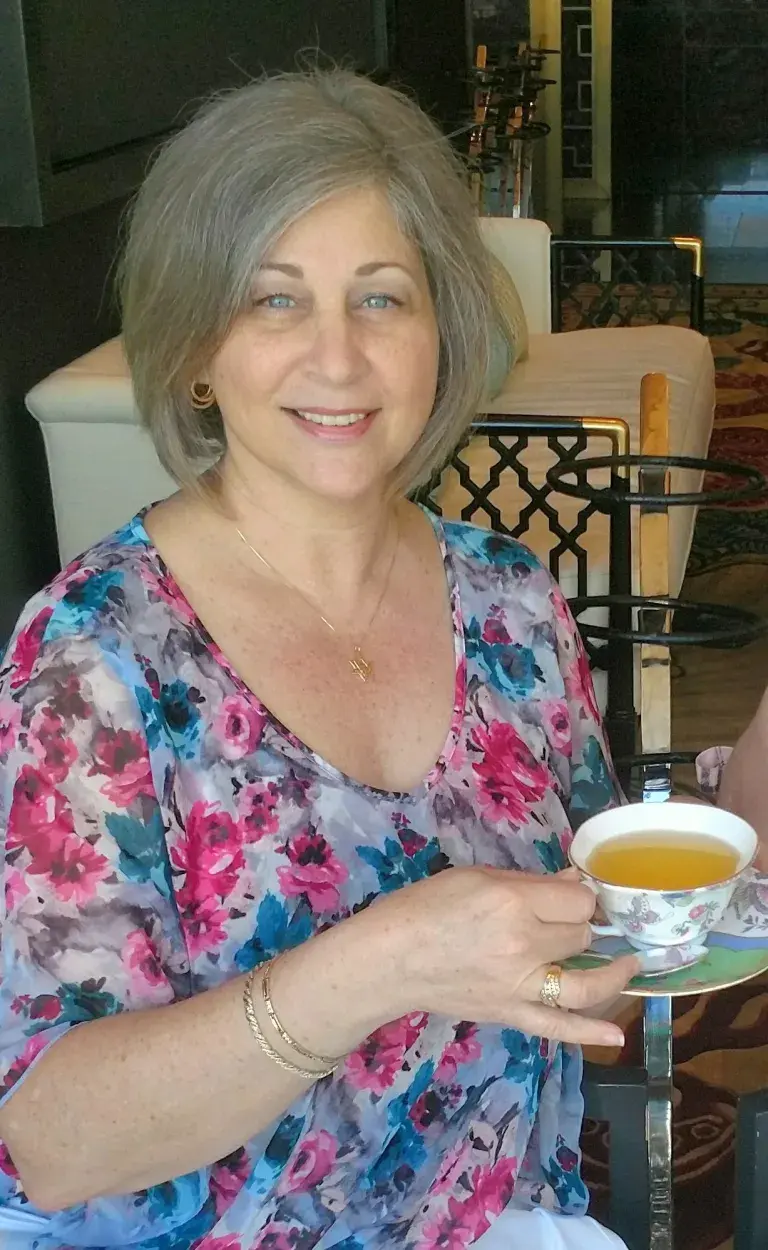

Thanks again for the interview! --Jennifer Wilck