WCW: Janet Bond Brill, PhD
Hello and welcome back to another Writer's Corner Wednesday!

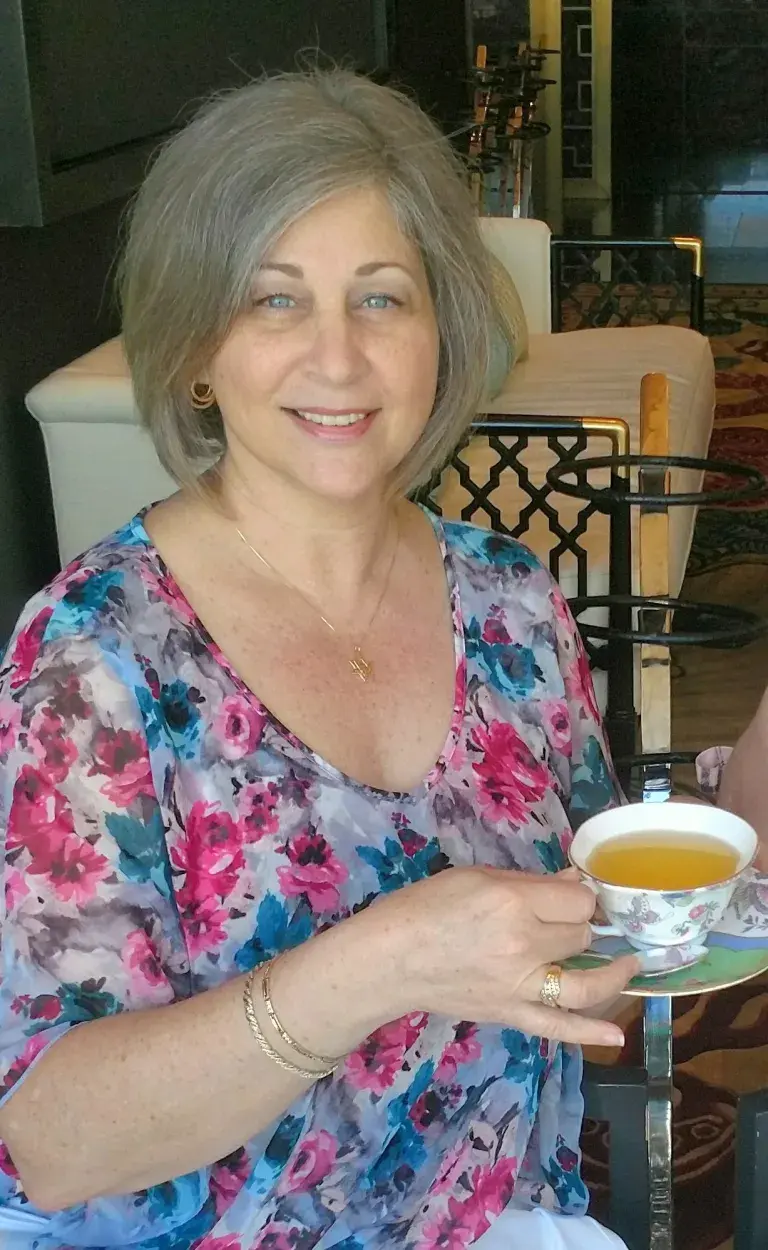
I'm really excited for this week's interview. I had the pleasure of talking to author Janet Bond Brill about her important and award-winning book, Little Edna's War: A True Story of Resistance and Hope. This book, which tells the story of how her Jewish mother-in-law became a child soldier for the Polish Home Army, was published by Amsterdam Publishers, where my new book was published, as well.
Janet and I talked about the future of Holocaust publishing, what happens when there are no more living survivors, and how a ten-year-old became an arms-bearing soldier.
Q. Little Edna’s War tells the story of your late mother-in-law’s Holocaust experience. How and when did Edna start opening up to you about what she went through? How did you decide to write a book about her stories? I’d love to hear a bit about the book’s origin story. As an aside, when I was working with Dora’s family to get her story written, it was her daughter-in-law Marsha to whom she opened up first. While her own kids were accustomed to never speaking about the Holocaust, Marsha was less shy about asking questions! It's interesting to me that a similar dynamic played out here.

A. Your instinct about daughters-in-law is an interesting one, and in a roundabout way my story bears it out, though I have to be honest about how long it took me to truly listen. I married Edna’s son, Sam, and I knew from the start that his parents were survivors. But in those early years of my marriage I heard only bits and pieces of her story. I was a young mother, consumed with raising my children and building a life, and I am not proud to say that the enormity of what Edna had lived through faded into the background. I knew it was there. I simply was not paying attention yet. The turning point came when Edna spoke at my children’s high school on Holocaust Remembrance Day. Hearing her tell it in her own words, to a room full of teenagers, I finally began to really listen. And in the last years of her life it dawned on me that her story would die with her unless someone told it, and that someone was going to be me. That is when I started asking the real questions, and I never stopped.
There was something else beneath that decision. Edna would never tell her own blood children the whole of what she had endured; she shielded them from the worst of it. But I came to feel that I could be the one to carry the torch, to take in all of it and bear the pain of it, so that my husband and my children would not have to. As excruciating as that was, it felt like a gift I could give them, and a gift I could give her. I loved Edna deeply, and I was endlessly grateful for the life she made possible, for mine and for my children’s. Without Edna surviving there is no Sam, no children, no grandchildren, no us. I did what I was trained to do, which is write and research. I simply never imagined I would use that training for something so sacred.
Q. As you so grippingly recount in the memoir, Edna and her family, especially her sister Miriam, had some truly harrowing experiences during the Nazi occupation of Warsaw. Can you share a little bit about what makes their story unique?
A. What sets Edna’s story apart is that it is not only a story of survival, but of resistance. She was a beautiful little blonde girl born in the wrong place at the wrong moment in history: a Jewish child who watched the Nazis march into Warsaw at four years old. By seven she was smuggling. By nine she was a fighter in the Polish Home Army, and by ten she was its youngest decorated soldier. She survived by disappearing into a false identity as a Catholic girl, was blessed by Pope Pius XII as a Catholic war hero who never knew he was blessing a Jewish child, and endured Nazi captivity as a prisoner of war. Her sister Miriam survived alongside her but carried wounds that never healed, and the cost she paid says something the statistics cannot. We tend to picture Jewish children of the Holocaust only as victims. Edna and Miriam force us to see them as something else entirely: as people who fought, outwitted, and endured, and who paid for it in ways that lasted the rest of their lives.
Q. In the book’s foreword, Michael Berenbaum addresses the fact that Holocaust studies will “transition between lived history and historical memory,” a point that we are sadly rapidly approaching. I love that phrase he used, and I’d love to hear more about how this fact, that someday not too far from now there will be no more living eyewitnesses, impacted your writing process and your decision to write this memoir in the first person, in Edna’s voice. How might this be a model for future writers and historians to follow? What challenges or limitations does it present?
A. Michael’s phrase about the transition from lived history to historical memory keeps me up at night, because we are almost there. Within a few years there will be no one left who can say “I was there.” That reality shaped everything about how I wrote this book. I chose to write it in the first person, in Edna’s own voice, on the advice of my friend John Anthony Miller, because I wanted the reader to stand inside her experience rather than observe it from a safe distance. I had thirty-seven years of her testimony to draw on, which is what made that choice possible and, I believe, responsible. I would caution any writer that first person is not a device to reach for lightly. You can only speak in a survivor’s voice if you have truly listened long enough to earn it. The limitation is also the safeguard: without deep, first-hand testimony, you risk putting words in a mouth that is no longer here to correct you. But when the testimony is there, I think this may be one of the most powerful ways to carry these stories forward, because it keeps the witness alive on the page even after she is gone.
Q. Little Edna’s War is by no means your first book. Was the process of writing Edna’s story different from that of your other books? Were there things that surprised you about writing a Holocaust memoir versus your work as a dietitian and nutritionist? Do you think you’ll write more narrative nonfiction?
A. This was unlike anything I had written. My health and nutrition books, published with Random House and Wiley, are about translating complex science into practical guidance that helps people live better. The work is rewarding, but it does not keep you awake at night. This did. What surprised me most was the emotional weight of it. With a health book, the pressure is to be accurate and clear. With Edna’s story, the pressure was to be accurate and clear and worthy of her, all at once. Every date, every scene, every word had to honor the truth of what happened without sanitizing the horror or exploiting it. I cross-referenced testimonies, consulted documentation experts, and cut thousands of words to make the narrative tighter and truer. My career took an unexpected turn, from wellness to witness, and I did not see it coming. As for what is next, I have felt the pull of this kind of work take hold of me, and I suspect I am not finished with memory and history yet.
Q. When I was pitching The World Has Caught Fire to agents and publishers, I got a lot of feedback along the lines of: “I don’t read Holocaust literature,” “Holocaust books don’t sell,” “it’s too upsetting,” and so on. Did you go through any of this with Little Edna’s War? If so, what is your response to this kind of feedback? Do you have any insights on how writers, historians, and survivors’ families can combat this attitude? How do we balance the historical need for these stories to be recorded with market trends?
A. I did, and it caught me completely off guard. I had spent my career as a bestselling health writer with two of the top houses in publishing, Random House and Wiley, so I assumed that when I switched genres the doors would open just as easily. They did not. My own literary agent could not sell Edna’s story, and I was genuinely shocked. But I refused to give up on her. I decided to go out and find a publisher myself, and after many rejections, Vallentine Mitchell agreed to take it on. By then, though, I knew exactly where I wanted Edna’s story to live. I held out for Amsterdam Publishers and for Liesbeth, whose house is devoted to preserving precisely these testimonies, and I am so glad I did. So my answer to any writer or survivor’s family who hits this wall is simple: do not accept a closed door as the final word. The resistance is real, but it is not the same thing as a story lacking worth or readers. The witnesses are dying, and antisemitism is rising again in our own time. If ever there were a moment when these stories needed to be recorded and read, it is now. I also believe the market underestimates readers. People are hungry for stories of courage, and Edna’s is as gripping as any thriller. We combat the attitude by refusing to accept it, by telling these stories so well that they cannot be ignored, and by holding out, as I did, for the people who understand why they matter.
Q. What is the best writing advice you’ve ever received? (I ask all of the writers I interview this question on my blog!)
A. The best writing advice I ever received came from my friend John Anthony Miller, a gifted writer of historical narrative, who helped me cross from decades of scientific writing into telling a true story. His most important counsel was to write the book in the first person, in Edna’s own voice. He explained that first person would be far more engaging than third, because the third person pulls the lens back onto the whole environment, the war, the ghetto, the vast sweep of history, while the first person keeps the focus where it belongs, on Edna alone. That single insight shaped the entire book. It is the reason readers do not simply learn about Edna from a distance. They stand inside her experience and see the war through her eyes.


Comments