WCW: Susan Kleinman

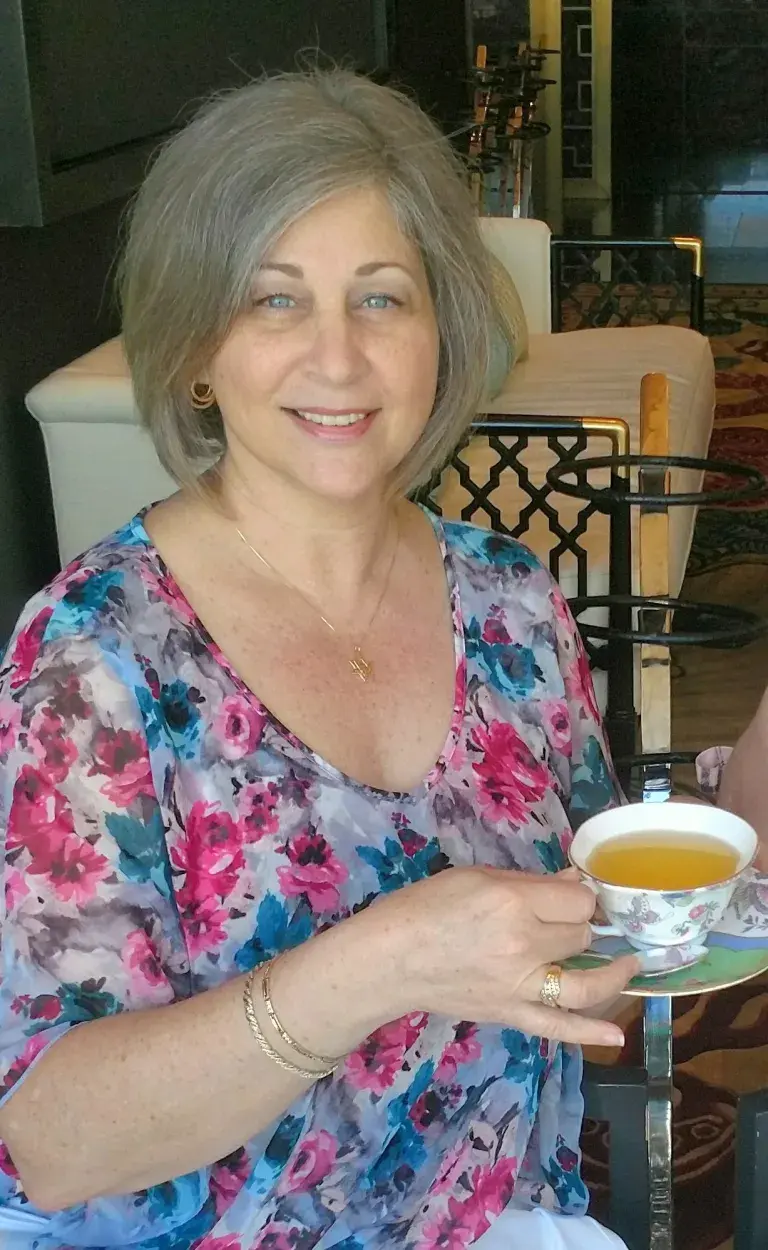
Happy summer, everyone! In between shuttling my daughter to camp and chasing after my budding toddler (who can crawl at the speed of light), I was able to interview journalist and now novelist Susan Kleinman about her debut novel, All Afternoon. Set in 1978, it tells the story of Marilyn, a woman who is beginning to realize that there may be more to life than being the perfect wife and mother.
Q. Mazel tov on publishing All Afternoon! You have had a long career as a writer, but this is your first novel. How did it come about? What inspired you to write a novel?
A. Thank you! I’ve been working as a freelance magazine journalist since 1986. Around 2001, I started writing short stories, as well, and slowly getting them published. What is now my novel, All Afternoon, started out in 2009 as a short story about an academic dinner party gone sideways -- just a funny slice of life. When I showed the piece to a writer-friend for feedback, he said he didn’t actually think it was a story, but rather the beginning of a novel, and that I should keep going with it. I had no idea of how to do that, so I signed up for a novel-writing class at Sarah Lawrence College, where my teachers recommended me for a fellowship that provided one-on-one mentorship for a year with a distinguished member of the faculty. I completed the first draft of All Afternoon that year. It took a few more years to write drafts #2 through 53,463, and then another several years to rethink and revise. (I am a very fast journalist… and a very, VERY slow fiction writer.)
Q. How would you describe your protagonist, Marilyn, to someone who hasn’t read the book yet? What is your favorite thing about her?

A. Marilyn Weisfeld was once a promising writer, but she gave up her literary aspirations when she got married in 1960 and had kids, and by the time the novel starts in 1978, she is so busy braiding challahs and driving carpools that she barely even remembers her early aspirations. When a friend who has become a famous novelist encourages her to start writing again, the dreams Marilyn had put on ice so long ago start to thaw, and she slowly wakes up to the reality of who she might have been and who she might yet become. Marilyn is both talented and lovable, but after a lifetime with a hyper-critical mother and then a dismissive husband, she has allowed herself to be convinced that she is nobody special. My favorite thing about her is the way she (slowly but surely) realizes that there is a whole lot more to her than she has believed, and opens herself up to the fact that she deserves a life beyond her kitchen and her community. As a writer, I really enjoyed creating the character of an aspiring writer and “watching” (or “making”) her find her footing as a storyteller.
Q. As you mentioned, the novel is set in a very specific point in time: 1978. Tell me a little bit about this decision. Why 1978? What in Marilyn’s story is specific to this period, and what do you think is more universal?
A. The late 1970s was the tail end of second-wave feminism in the US, and I wanted Marilyn to find herself torn between the “before” and “after” of the women’s liberation movement. If I had set the story any earlier, her evolution might have seemed radical or groundbreaking, and Marilyn is definitely not a radical person; any later, and the fact that she was still deriving her self-worth from dusting crown moldings and vacuuming mattresses would have been infuriating. In other words, I wanted to paint her as a late adopter of feminist ideas, but to not have her miss the boat entirely. Also, writing about the 1970s is FUN. I had a great time weaving in cultural references from that decade, and using those as a backdrop for a story that transcends decades, about what happens when we set our own dreams aside, and what it takes to find them again. As for why 1978 and not 1977 or 1979, I wanted to set the book in a year when there wasn’t too much going on in the news, so that I could keep the focus on Marilyn and her world without it seeming odd that there was no mention of huge international events.
Q. There has been a lot of recent discussion among Jewish writers about the specific challenges that Jewish writers have been facing in the publishing world. Specifically, implicit and explicit bias against/fear of signing Jewish writers. Did you experience any of this with All Afternoon? Is there anything that gives you hope for Jewish writers?
A. I started writing All Afternoon seventeen years ago, when serious antisemitism in America seemed like a long-ago and far-away problem, so I didn’t give it much thought when I was writing. (There’s no mention of anti-Jewish sentiment in the book, and having been a teenager in 1978, when the story takes place, I can say that that is true to life.) Sadly, the landscape today is very different, and one couldn’t write a book about a Jewish family set in 2026 and NOT have antisemitism be in the background, if not right up front and frighteningly center. When I decided, two years ago, to try to bring All Afternoon out into the world, I felt very strongly that, as the old Yiddish saying goes, it’s better to light a candle than curse the darkness -- meaning, that rather than bang my head against the wall trying to gain acceptance from quarters of the literary world that are hostile to Jewish writers and Jewish stories, I would lean in hard to connecting directly with people and reviewers (Jewish or not) who ARE more open minded. I’m happy that All Afternoon is finding its way into the hearts (and onto the bookshelves) of not only Jews but also Gentile readers who understand that whatever the particulars of our backgrounds and faiths, Marilyn’s story is a story most women can relate to.
I wish I could be more optimistic that the discrimination against Jewish writers is going to change anytime soon, but I AM confident that, as we have done for millenia, Jews will adapt to the realities around us and build the support and structures we need to keep us going. I see that already, with Jewish authors finding open windows to climb through when doors are slammed in their faces: self publishing very successfully when big publishing houses say “This isn’t the right time for a Jewish story,” and using social media to reach audiences when so many of the literary journals that used to include Jewish stories have turned into hotbeds of anti-Jewish hate. The degree to which Jewish writers are lifting each other up in this moment is really touching -- and very encouraging.
Q. What is the best writing advice you’ve ever received?
A. Don’t chase trends or try to write “to the market.” Tell the story you want to tell, make it the best it can be, and have faith that (if you work your butt off) it will find its readers. In terms of HOW to make it the best it can be, this oft-given advice is still the best: Murder your darlings. Don’t be sentimental about cutting scenes or lines that you think are the most clever or the most lyrical thing you’ve ever written. If it doesn't serve the story, out it goes!


Comments