Special WCW: Klezmer singer and actor Daniella Rabbani
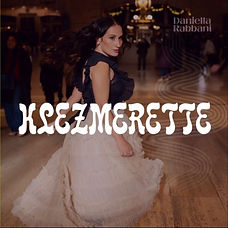
This week on Writer's Corner Wednesday, I'm doing something a little bit different -- I had the absoloute pleasure to interview actor, podcaster, and singer Daniella Rabbani, whose new klezmer project, Klezmerette, just released last month. Whether you are a Klezmer stan or totally new to the centuries-old Yiddish music, read on to learn more about how Rabbani is bringing this tradition into a new era.
Q. Your debut album, Klezmerette, brings together your work as a singer with a musical tradition that carries so much Jewish history, emotion, and cultural memory. For readers who are new to your work, how would you describe yourself as an artist, and what do you hope people will discover about you through this album?
A. First of all THANK YOU for listening and for your interest in this genre of music. For readers who are new to my work: My name is Daniella Rabbani and you’ve likely heard my voice on national commercial campaigns for brands like Colgate Optic White or Starbucks. You may have also seen me in Oceans 8 opposite Sandra Bullock or in the first season of "God Friended Me" on CBS as Rabbi Zoe Schwartz. I am a Brooklyn mom of two and I host "The Mom Curious Podcast." I also sing in Yiddish. I know these things seem like totally different careers but it’s all just storytelling to me! My latest project is Klezmerette--it’s actually a multimedia project where I made this beautiful album produced by Grammy winner Joanie Leeds and Klezmer virtuoso Michael Winograd AND a short documentary about the making of the album.
Q. As someone who is relatively new to klezmer music, I’m curious about the balance between traditional songs and more contemporary interpretations on the album. I know, for example, that “Friling” was written by a man named Shmerke Kaczerginski while he was imprisoned in the Vilna Ghetto, following the death of his wife. Which songs on Klezmerette are traditional, which are original, and where did you and your collaborators take creative liberties with existing material? What was the process of selecting the songs and developing the arrangements?
A. Every song on Klezmerette is a traditional klezmer tune, meaning I did not write the lyrics or composition. My producer Michael Winograd arranged them so that they have a fresh feel as they’ve all been recorded many times before save for one deep cut. I really wanted to introduce Klezmer music to new ears so I picked Yiddish standards--the ones I knew were bangers--and Michael persuaded me to do a couple of really special underrepresented songs for the longtime Yiddish music lovers. It was really a conversation of who is this for and why. I wanted it to be widely received and easily loved. And for Michael, he wanted it to be original and needed in the klezmer space too. We come from different artistic communities so striking that balance was fun.
Q. As kind of a continuation of the question above, I am always interested in hearing the story behind the creation of art. You’ve spent many years as a performer – what was it that made you decide to create this studio album? Were there any particular challenges or triumphs that stick out from the process?
A. I’ve wanted to record an album for so long and I even tried once! I recorded four songs in an electronic style, put it on SoundCloud and just never looked at them again. They were bad, that’s why. But I tried! And then I spent many years as a concert singer of this music, sometimes filming the work but more often than not letting the ephemeral nature of theater do its magic. I had been talking with Michael about making this for a long time. And then I met Joanie who has an initiative at The Recording Academy to create a Jewish music category. One of the ways to make that happen is to record Jewish music. When she told me about that, I thought: oh I can do that! So I did. Not without its real challenges especially because we were filming a doc in tandem, but we did it and they’re beautiful.

Q. Klezmer music seems to really be having a revival. I’ve heard you say in other interviews that your performances are often full of young people, and – having had the pleasure of listening to Klezmerette – I can say that it is a dynamic, joyful, and at times almost campy (in the best possible way!) experience that might surprise some of my readers. Is this something that is inherent in “traditional” klezmer music, or is it part of the revival by today’s musicians?
A. Kitch or camp is SO Yiddish. Don’t you think? At least in America. Not so much in Europe or Israel but American Yiddish is SO campy. And funny. And irreverent. YOU HEARD RIGHT BB! We silly :)
Q. You’ve spoken about how you grew up around Yiddish speakers, but didn’t actually speak the language yourself until you made the decision to take classes. What was it that made you decide to formally learn this language that is so often considered a “dying” language? Why might others want to try and pick it up, as well? (As an aside, my seven-year-old daughter and I go through periods of learning Yiddish together and have a lot of fun with it. She picks it up so easily!).
A. OMG that’s so fun! I have a seven year old daughter too and she sang with me on stage at the cutting room in Yiddish. She picked it up so quickly. It’s just a beautiful melodic expressive language that carries the soul of so many of our ancestors. But I don’t have any hopes that people will speak Yiddish. I hope people can appreciate Yiddish though. And all the art created from these beautiful people who lived.
I don’t speak Yiddish. Not well at least. And I’m ok with that. Because there are lots of ways to engage with these texts without being a fluent Yiddish speaker. And that’s fab too.
Q. When I speak to fellow Jewish writers, one thing that almost always comes up is how grim the publishing industry is for Jewish writers, stories, and characters, especially in the three years since October 7th. (Even non-Jewish organizations are starting to remark on the sharp drop in Jewish representation since then, which, I think, is perhaps how you know things are really bad). However, listening to you speak about klezmer in other interviews and on your social media, I don’t necessarily get the same sense of doom I do when I talk to writers. In fact, as I mentioned above, it feels quite joyful. Do you have any idea why this might be? Are you seeing things that might make Jewish creatives in other fields feel more hopeful about the reception of Jewish work?
A. I experience the same ostracism you describe. On all sides of the entertainment industry. I think the joy you are experiencing watching my content is the joy of the work itself. Of the music itself. And probably the fact that I am not surprised anymore by the blacklisting or whatever it is that’s going on. It makes my life much harder but I also have perspective. There are things I can control and things I cannot. What I can control is not censoring myself. Not defining myself by what people say or think or even do to me. In that way I take back my sovereignty and that’s a powerful act.
Q. I typically end interviews by asking “what’s the best writing advice you’ve ever been given.” To edit that just a bit, I am curious to know what’s your best piece of advice for other creatives reading this – especially those who are juggling full-time jobs, caregiving, parenting, etc. – who have ever felt like giving up. What is it that has kept your career going when things feel hard?
A. You ask such great questions!! The truth is that I don’t expect it not to be hard. This is REALLY hard stuff. First thing’s first: no perfectionism! Just do the thing. Second: be nice to yourself. Third: surround yourself with people who are nice to you. Very very very important. Fourth: the first step to winning an Oscar is having food in your refrigerator so that full time job is fueling your art thank you very much. Five: have as much fun as humanly possible even while slogging through the rejections and the poverty and the bullshit. Somehow it’s gotta be enjoyable. MWAH!!! Thank you!!!!
***
You can find Klezmerette HERE or wherever you get your music!


Comments