WCW: Lynne Golodner
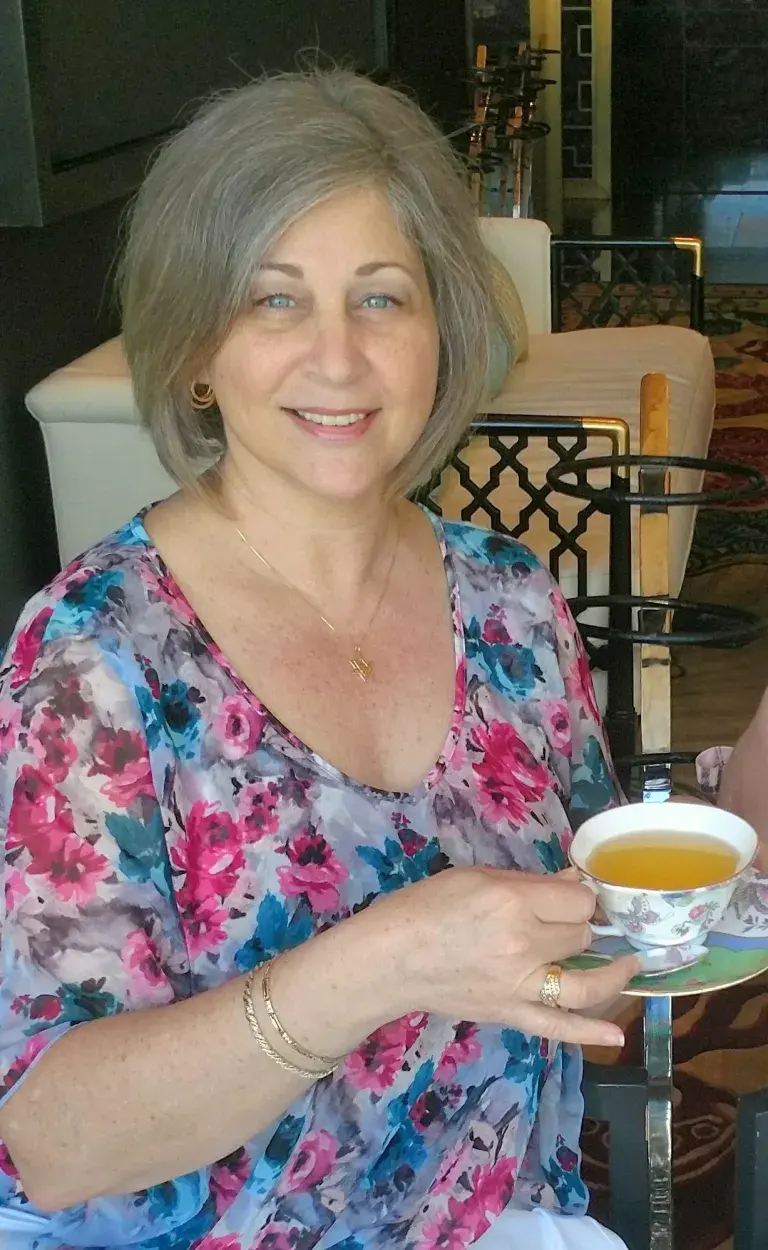
Welcome back to another Writer's Corner Wednesday! This week, I had the opportunity to chat with Lynne Golodner, prolific author of essays, poems, nonfiction books, and novels. You may know her as the author of I Love You, Charlie Tanner, Woman of Valor, and -- one of my favorites -- Cave of Secrets. Read on to learn more about her work, process, and her latest novel!

Q. Congratulations on your newest release! Two Lifetimes (out October 20th!) manages to be both a sweeping historical narrative and also an intimate look at the lives of its central characters. How did this story come to you? What was your favorite thing about creating these characters?

A. This story was inspired by my friendship with my best friend, Katie Scott. Katie and I met in our 20s in a poetry writing course and immediately clicked. I felt like I’d always known her, like if it were possible, we were connected in a former life (or more than one!). Katie is Catholic, and I’m Jewish, and that was also a connection point. These days, I call her “Rabbi Katie,” because she knows more about Judaism than many Jews and is a huge ally for the Jewish community. I wondered what it would’ve been like if she’d been Jewish in a former life and I had been Catholic. That was the inspiration for this story! In the first round of imagining, I actually had three lifetimes in mind, but it became too unwieldy to write, so I left it with two.
Q. One of the main plots in Two Lifetimes is set during and immediately after the Holocaust. What was it like to take on such a heavy, loaded historical event in a novel?
A. I actually dreaded this to be honest! Which is funny to say because I didn’t have to write this book, right? I debated with myself because there are so many books about the Holocaust and I almost am overloaded with Holocaust stories, but I do believe that we need to keep telling them, especially as fewer survivors remain alive to be firsthand witnesses. It is such an awful part of human history, and it’s incumbent on us to keep it in sight, and try to understand what led to it, so we don’t keep repeating past horrors. I also wanted to explore the tiny glimmers of hope from that dark time, like a non-Jew standing up for a Jew, which did happen, just not in as great of numbers as we’d like.
Q. Many of your plots involve relationships – friendships, romances, even co-workers – between Jewish and non-Jewish characters, and also Jewish characters who aren’t necessarily part of big Jewish communities. Maybe they aren’t super religious, or live someplace without huge Jewish populations, for instance. I’m curious: is this a reflection of your own experience as a Jew? As a Jew whose Jewish background, observance, and community do not fit a specific mold, I really love this!.
A. I grew up Reform, spent a decade in the Orthodox community and am now an officer of the board of my Conservative synagogue, so I’ve been a smorgasbord of Jewish denominations in my lifetime. But I call myself “just Jewish.” I take and reject equally from all denominations, and I don’t fit neatly into a tidy box. I never have, not just in Judaism but in general. I am a microcosm of interests and beliefs, and I think maybe we all are. So this is represented in my books. I am loud and proud as a Jewish woman, and I will defend my identity to my dying day, but it isn’t clear-cut or stereotypical in any way. Which I think is very human.
Q. As a writer, I am always so impressed with novels that span big gaps of time and multiple points of view – I think that it can be so hard to balance numerous plots while also allowing readers to really get to know individual characters. This is one thing that Two Lifetimes does so well. From a writerly perspective, how do you manage finding that balance in a novel like this, that has so many different characters and timelines? Did you run into any specific challenges, or do you have any advice for fellow writers who are working through similarity complex plots?
A. Thank you!! Any novel can feel overwhelming to write, but when you break it down into manageable chunks–scenes, one scene at a time–it’s doable. That’s how I write. I plan out my novels to detail, and then I chip away at the writing day after day, one scene at a time. I also do a lot of research in the planning phases so I don’t get stuck or feel like I don’t know what will come next. When I’ve done the research, I feel empowered to write the story!
Q. There is so much discussion in the Jewish writing/publishing world about how hostile mainstream publishing can be to Jewish voices – especially in our post-October 7th world. It can feel hard to not get caught up in the doom and gloom. What are your thoughts on this? Do you see anything to be hopeful about as a Jewish writer right now?
A. As terrible as this time is–and it IS terrible–the gift of it is that we’ve come back to ourselves. Perhaps the “golden age of Judaism in America,” which was pretty much my whole life up until October 7, 2023, misled us into getting comfortable and taking our Jewish identity for granted. I can’t speak for anyone other than myself, but I’ve always been a proud Jew, while also always wanting to fit in, to belong. Maybe we’re not meant to belong in the greater world?
I decided to create my author brand around my strong Jewish identity because I wanted to see positive Jewish representation in fiction (as well as in the world). I’ve always been a rebel by nature–I don’t like people telling me what to do or telling me who I am–and I’ve always written about my identity, so it was a natural fit. I then created a publishing imprint, Scotia Road Books, so I wouldn’t have to water down the Jewish to win acceptance in mainstream publishing. It’s a business, publishing, and the goal is to make money. Publishing is tough for Jews these days, but people love my books, so I gladly take it on myself to write great books and do the hard work of connecting with readers so they get read.
It’s always hopeful to lean into your identity. To love your ancestral identity. To embrace who you are and the legacy of your tradition.
For more on Lynne's work -- and to buy her books -- visit her HERE.


Comments